The Center for Snow and Avalanche Studies is documenting an unusually low snow year in Colorado. The team monitors how dust layers and temperatures affect snowmelt patterns, building on over two decades of data collection. Their research helps explain the relationship between dust, climate, and the snowpack that provides 70% of Colorado's water. This nonprofit shares their findings for free, offering valuable insights for water managers and helping us understand what's happening in our mountains. This story is sponsored by Dunkin Donuts and Keesee Motor Company.
We are the Center for Snow and Avalanche studies. We are a nonprofit located on Red Mountain Pass and we operate five meteorological stations and provide data for free. And we also partner with a lot of organizations to do research projects.
You are watching the Local News Network, brought to you by Dunkin Donuts and Keesee Motor Company.
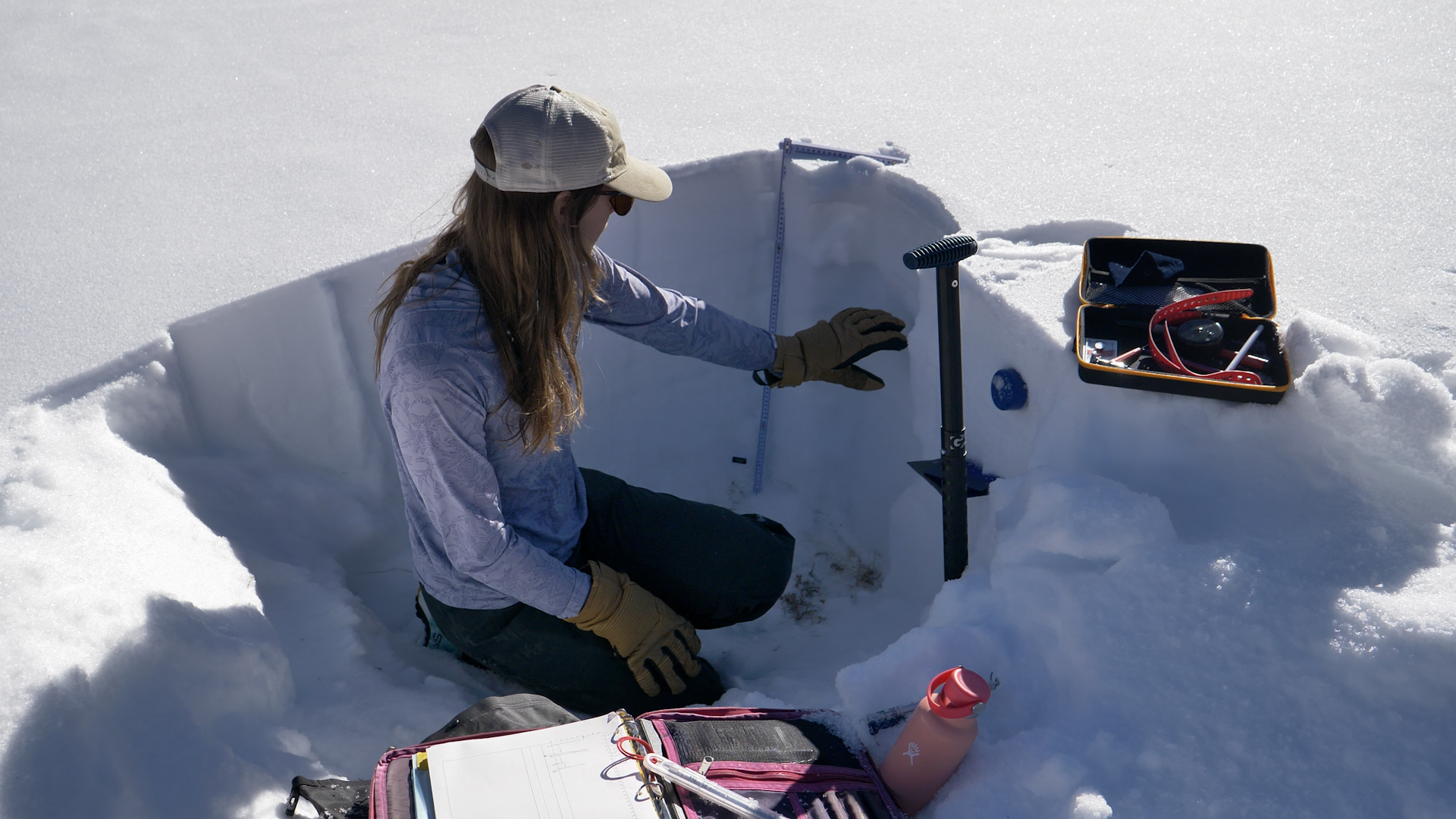
Here we are at Swamp Angel study plot and the elevation's about 11,200 feet. So we do snow pits here. So we dig snow pits usually every couple weeks where we do a snow profile. We check for new dust, we do a variety of snow pack measurements. And this is the century site for our dust on snow program. So this is where we kind of started monitoring dust on snow and where we do the most intensive monitoring, we also take dust samples to look at how much dust, the mineral composition of the dust and how many layers there are at a given time. Big thing that we monitor here is the albedo of the snow pack, which is the reflectivity of the snow surface. The main thing that dust does is reduce the albedo. And in the springtime when the days are lengthening, you get more solar radiation and that's actually what kicks off melt. So in the spring, if you have dust layers, they blow in, they form a layer in the snow pack, and then you get more snow on top in the spring when the snow starts to melt. Once that dust is exposed, it stays on the surface for the remainder of the melt season. And those dark particles really impact how much solar radiation is absorbed. So that big energy input is what can really kick off melt. And you can see the snow pack melting out earlier than normal. Even mild dust layers can result in earlier meltdown. A lot of places in Colorado are experiencing their lowest snow pack on record. You can really directly link these warm temperatures to climate change, human emissions, driven climate change, and that affects the snow pack in multiple ways. Not as obvious as it just, it's hot, so it's melting. But in terms of you get more rain instead of snowfall, which translates to less water as runoff into streams. So snowpack provides like 70% of the water input into stream flow in Colorado. We're seeing declines in like 90% of snow monitoring sites across the Rockies. So you can attribute that to more rain of snow. More plants exposed, like more bare ground and less snow covered area makes you lose water to the atmosphere due to evapotranspiration. So you have a worse runoff efficiency, even where you might have a normal snow year. because of those warm temperatures. Is low precipitation related to climate change? To say that this year precipitation is low due to climate change, we've seen this low precipitation before still could be due to climate change. I think that is a little less understood. We sort of are living with wildfire risk all year round and a low spring snow pack is definitely increasing that risk for a lot of people.
For more information, visit snow studies.org and for more stories like this, visit montezumalocal.news.


.jpg)